Why Cows Need to Be Milked Twice a Day (And What Happens If They Aren’t)
If you’ve ever wondered why dairy farmers are up before sunrise every single day — including holidays, birthdays, and blizzards — the answer comes down to simple biology. A dairy cow’s udder is constantly producing milk, and once it’s full, pressure builds up inside. Most dairy cows are milked twice a day, roughly every 12 hours, because that’s the rhythm that keeps them comfortable and healthy while matching how quickly their bodies replenish milk. Skip a milking, and that pressure doesn’t just disappear — it builds.
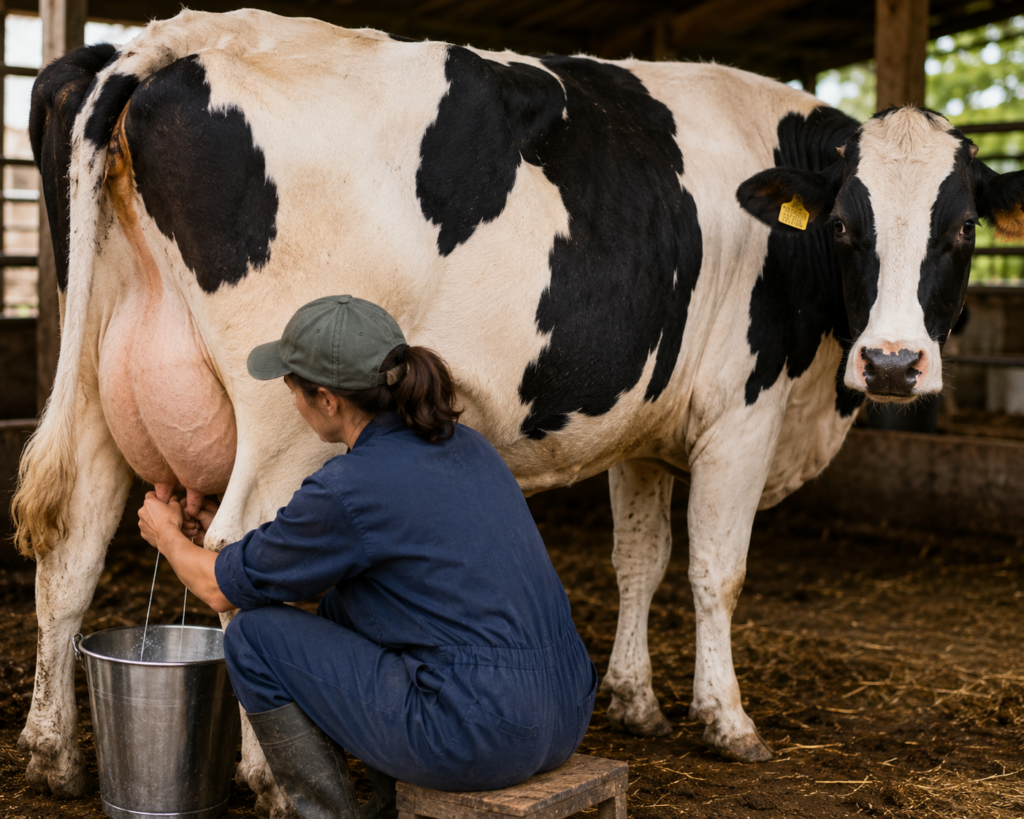 If a cow goes too long without being milked, the consequences range from uncomfortable to genuinely dangerous. The backed-up milk causes painful engorgement, and the udder tissue can become inflamed, raising the risk of mastitis — a bacterial infection that’s one of the most common and costly health problems in dairy cows. Beyond the welfare concern, there’s a practical one too: a cow’s body interprets “no one’s taking this milk” as a signal to slow down future production, which can permanently reduce how much milk she gives. So that twice-a-day routine isn’t just tradition — it’s a non-negotiable part of keeping cows healthy and farms running.
How long can a cow continue producing milk?
A healthy cow can continue producing milk for many years, as long as she continues to have calves.
Most dairy cows remain productive until they are 5–8 years old, not because they can no longer make milk, but because milk production often declines or health and fertility issues arise.
Biologically, cows can live 15–20 years or more and can still produce milk in later years if they continue calving, although yields are generally lower than during their peak years.
Our cows at Loma Vista Farm in Vallejo are well beyond 20 years old so we are “saved” from worrying about calves and having to get up at the crack of dawn.
Next time you visit the farm be sure to say hi to Keebler and Oreo,
Your Friends of Loma Vista Farm


