The Secret Language of Cows: How They Communicate With Each Other
 Cows are far more vocal and socially sophisticated than most people give them credit for, and researchers have found that each cow actually has her own distinct “voice” — much like humans do. A widely cited study out of the University of Sydney found that cows maintain individual vocal signatures throughout their lives, meaning herd mates can recognize who’s calling just from the sound, the same way you’d recognize a friend’s voice on the phone without seeing their name pop up. Cows use different moos to communicate different things entirely: there are excited moos around feeding time, distressed calls when a cow is separated from her calf or the herd, and contented low murmurs during calm social moments. Mother cows and their calves develop especially strong vocal bonds, calling back and forth to keep track of each other, sometimes even after the calf has been weaned.
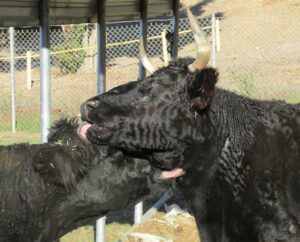
Beyond vocalizations, cows communicate constantly through body language and physical touch in ways that are easy to miss if you’re not looking closely. They groom each other, nudge and rub heads as a sign of affection and social bonding, and form close friendships within the herd, with research showing that separating bonded cows from each other measurably raises their stress levels and heart rate. Ear position and tail movement also carry meaning, similar to how a dog’s body language signals its mood, with relaxed ears and a loosely swinging tail indicating contentment, and pinned-back ears or rapid tail flicking signaling irritation or stress. Far from the silent, simple animals they’re often portrayed as, cows operate within a rich social and communicative world that farmers who work closely with herds learn to read fluently.
Next time you bring your kids to the farm make sure you stop by our cows and see if they are talking to each other.
Your Friends of Loma Vista Farm


