Rita's Monthly Gardening Tips, October 1, 2013
At this time of year with the leaves on the trees turning brown, summer crops going to the compost pile, and Halloween around the corner, it’s a perfect time to talk about the creepy topic of death and decay. Understanding and appreciating this process as it relates to your garden will increase your growing success.
Below is an explanation of the cast and characters in the tale of decomposition.
Microorganisms
Bacteria, fungi, and actinomycetes are the three main types of decomposers in the environment. They break down dead organisms into nutrients (we call this process “rotting”), and these nutrients are then returned to the soil. If it weren’t for decomposers, we’d be up to our armpits in dead things!
Bacteria are the smallest living organisms and the most numerous of decomposers; they make up 90% of the billions of microorganisms typically found in a gram of soil.
Fungi is the name for simple organisms including molds and yeasts. Next to bacteria, fungi are the most efficient decomposer organisms.
Actinomycetes are the primary decomposers of tough plant tissues like bark, paper, and stems. Soil’s “earthy” smell is caused by actinomycetes at work.
Macroorganisms
As mentioned above, larger organisms are involved in physically transforming organic material into compost. They are active during the later stages of composting—digging, chewing, sucking, digesting, and mixing compostable materials. In addition to mixing materials, they break it into smaller pieces and transform it into more digestible forms for microorganisms. Their excrement is also digested by bacteria, causing more nutrients to be released.
Micro- and macroorganisms are part of a complex food chain. This food chain consists of organisms classified as first-, second-, or third-level consumers. The categories are based on what they eat and who eats them. First-level consumers become the food for second-level consumers, which, in turn, are eaten by third-level consumers.
The following is an overview of some of the larger macroorganisms you are likely to find in a compost pile.
Ants – Ants feed on a variety of materials including fungi, seeds, sweets, and other insects. They help the composting process by bringing fungi and other organisms into their nests. Ants can make compost richer in phosphorus and potassium by moving minerals around as they work.
Millipedes – Millipedes have wormlike segmented bodies, with each segment having two pairs of walking legs (except the front few segments). Millipedes help break down plant material by eating soft decaying vegetation. They will roll up in a ball when in danger.
Centipedes – Centipedes are flat, segmented worms with one pair of legs in each segment. They are third-level consumers that feed on soil invertebrates, especially insects and spiders.
Sow bugs – Sow bugs have a flat and oval body with distinct segments and 10 pairs of legs. They are first-level consumers that feed on rotting woody materials and other decaying vegetation. Pill bugs look similar to sow bugs, but roll up in a ball when disturbed.
Springtails – Springtails are small insects distinguished by their ability to jump when disturbed. They rarely exceed one-quarter inch in length and vary in color from white to blue to black. Springtails are principally fungi feeders, although they also eat molds and chew on decomposing plants.
Flies – Flies are two-wing insects that feed on almost any kind of organic material. They also act as airborne carriers of bacteria, depositing it wherever they land. Although flies are not often a problem associated with compost piles, you can control their numbers by keeping a layer of dry leaves or grass clippings on top of the pile. Also, bury food scraps at least 8 to 12 inches deep into the pile. Thermophilic temperatures kill fly larvae. Mites help to keep fly larvae reduced in numbers.
Beetles – Beetles are insects with two pairs of wings. Types commonly found in compost piles include the rove beetle, ground beetle, and feather-winged beetle.The feather-winged beetle feeds on fungal spores. Immature grubs feed on decaying vegetables. Adult rove and ground beetles prey on snails, slugs, and other small animals.
Snails and slugs – Snails and slugs are mollusks that travel in a creeping movement. Snails have a spiral shell with a distinct head and retractable foot. Slugs do not have a shell and are somewhat bullet shaped with antennae on their front section. They feed primarily on living plant material, but they will also attack plant debris. Look for them in finished compost before using it, because they could do damage to your garden if they move in.
Spiders – Spiders are eight-legged creatures and third-level consumers that feed on insects and small invertebrates. They can be very helpful for controlling garden pests.
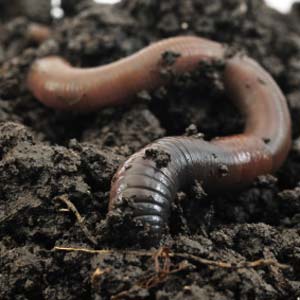
Earthworms – Earthworms are the most important of the large physical decomposers in a compost pile. Earthworms ingest organic matter and digest it with the help of tiny stones in their gizzards. Their intestinal juices are rich in hormones, enzymes, and other fermenting substances that continue the breakdown process. The worms leave dark, fertile castings behind. A worm can produce its weight in castings each day. These castings are rich in plant nutrients such as nitrogen, calcium, magnesium, and phosphorus that might otherwise be unavailable to plants. Earthworms thrive on compost and contribute greatly to its quality. The presence of earthworms in either compost or soil is evidence of good microbial activity.
Happy Gardening
See you next month