Author Archives: Rita LeRoy

February 2014
Rethinking Grass

Rita's Monthly Gardening Tips,  February 3, 2014

Rethinking Grass

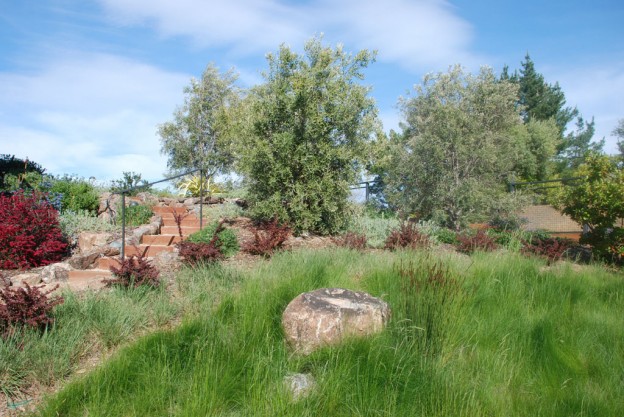
In our urban yards, a grassy lawn is an iconic display of “The American Dream.” It’s as much a part of our cultural upbringing as baseball and apple pie. From the botanical perspective, grass is just a ground cover, one of many. The typical grass lawn is currently discouraged because of its high needs for water, maintenance, and chemical fertilizers and herbicides. Great strides have been made in moving away from the typical lush lawns to instead planting drought-tolerant, native grasses. There are many alternative plants to cover the ground other than grass, but grass plants certainly can have their place in our biodiverse landscape.

According to the California Native Grasslands Association, native grasses planted in urban landscapes are low-maintenance and drought-tolerant and can filter polluted runoff.

Bunch grasses are grass varieties that don’t spread and provide a good nesting habitat for bumblebees and other beneficial insects that pollinate and protect our food crops. Bunch grasses can be interplanted with drought-tolerant flowers that provide nectar and pollen for wildlife. Alternatively, there are native grasses that come in sod form for a more lawnlike appearance. Native grasses change in appearance through the seasons.

Some native grasses can be mowed, and some can be allowed to grow au naturel. Check here www.thedublinroofers.ie/. A couple of nice examples of native grass plantings are 30 acres of native grasses at Chrissy Field and at the Academy of Sciences, both in San Francisco.

Hedgerow Farms, Pacific Coast Seed Company, and the Delta Bluegrass Company are good resources for drought-tolerant California native grasses and more information about growing native grasses.

The Solano County Water Agency is offering a rebate if you purchase a Smart Irrigation Controller http://www.waterprograms.com/solano/. Also, if you replace your thirsty turf-grass with water-efficient landscaping, such as the native grasses described above, you can receive a rebate of $1/square foot. Call 707-455-1113 for more information.

For more information check out the websites below.

Happy Gardening!

California Native Grasslands Association http://www.Cnga.org

Solano County Water Agency http://www.SolanoSavesWater.org

Hedgerow Farms http://www.hedgerowfarms.com

Delta Bluegrass Company http://www.DeltaBluegrass.com
January 2014 – Five Garden Resolutions

Rita's Monthly Gardening Tips,  January 2, 2014

Five Garden Resolutions

Grow what you love to eat

If you have never grown any food crops before, give it a try this year. Start small. When deciding what to grow, choose vegetables and fruits that you truly enjoy eating. Are you crazy about carrots, love lettuce, adore artichokes? Then grow some. Not so wild about watercress? Then don’t grow that. Once you have thought about what you love to eat, then find out if it grows easily in your area. If you’re eager for eggplants but they don’t grow well in your area, it isn’t worth it. Grow just enough of the easiest-to-grow plants to make your experience fun and successful.

Grow flowers to support pollinators

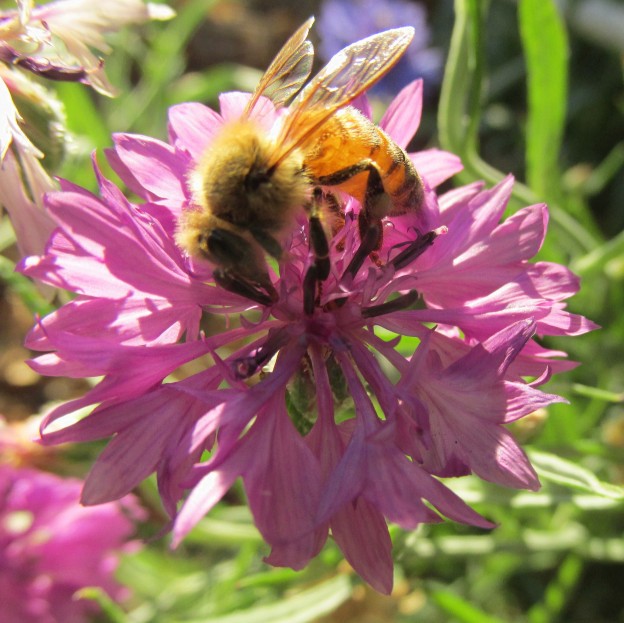
Pollinators are our garden buddies, our partners in life, and our link to a healthy, thriving garden. Bees need to eat every day, not just when, for example, our apple trees are blooming. If we want our apple trees pollinated, then we must plant flowers or other vegetables that will provide a banquet of delicious nectar and pollen for our hard-working pollinators every day. Every creature in nature plays an important role in the web of life.

Use less water

You’ll be hearing a lot about water conservation this year. Plan now for how you will still enjoy gardening while at the same time making the best use of every drop of water. Mulch, soaker hoses, drip hoses on timers, and drought-tolerant plants are all good strategies.

Use no chemical pesticides

This is such an important one. The word pesticide broken down means “pest”— anything we don’t like—and “cide”—to kill. Because pesticides can’t read our minds to determine what we personally like and dislike, they pretty much kill or weaken everything as they funnel through the food chain and down the watershed. Mice provide food for owls, spiders provide food for songbirds, and aphids provide food for ladybugs. Learn other pest management skills, such as trapping or exclusion.

Allow time to just enjoy the garden

Make room in your garden for a quiet bench to sit back and enjoy the beauty and bounty that you have created. Watch the bees, birds, and butterflies. Breathe deeply the fragrance of herbs and flowers. Savor the taste of fresh, hand-picked fruits and vegetables. Take pleasure in your role as caretaker of a healthy environment.